Top Hot Dip Galvanized Steel Coil Suppliers Worldwide?
Choosing reliable Hot Dip Galvanized Steel Coil Suppliers requires more than comparing quoted prices. Buyers must examine production experience, coating quality, steel grades, delivery capacity, and technical support. A polished website proves very little.
Leading suppliers usually operate modern galvanizing lines with controlled zinc baths and continuous thickness monitoring. Their coils should show consistent surfaces, stable dimensions, and strong adhesion after forming. Test certificates should identify yield strength, tensile strength, coating mass, coil weight, and applicable standards. These details matter when steel will face rain, humidity, salt air, or repeated bending.
Experience helps.
However, supplier claims need independent verification. Request recent inspection reports, sample coils, factory photographs, and references from comparable projects. A dependable manufacturer should explain its process clearly, including edge condition, oiling, passivation, packaging, and storage recommendations. Export experience also matters because moisture-resistant wrapping and secure loading can prevent damage during long sea journeys.
This guide introduces prominent Hot Dip Galvanized Steel Coil suppliers worldwide and explains how to assess them fairly. It considers manufacturing capability, product range, quality systems, regional reach, and customer service. Rankings can change as capacity, pricing, and certifications develop. No supplier is perfect, and online information may be incomplete. Buyers should confirm current specifications directly before signing contracts.
A practical comparison should connect laboratory results with real jobsite needs. A coil that looks bright may still fail expectations if its coating or forming performance is unsuitable. Careful questions reveal more than attractive brochures.
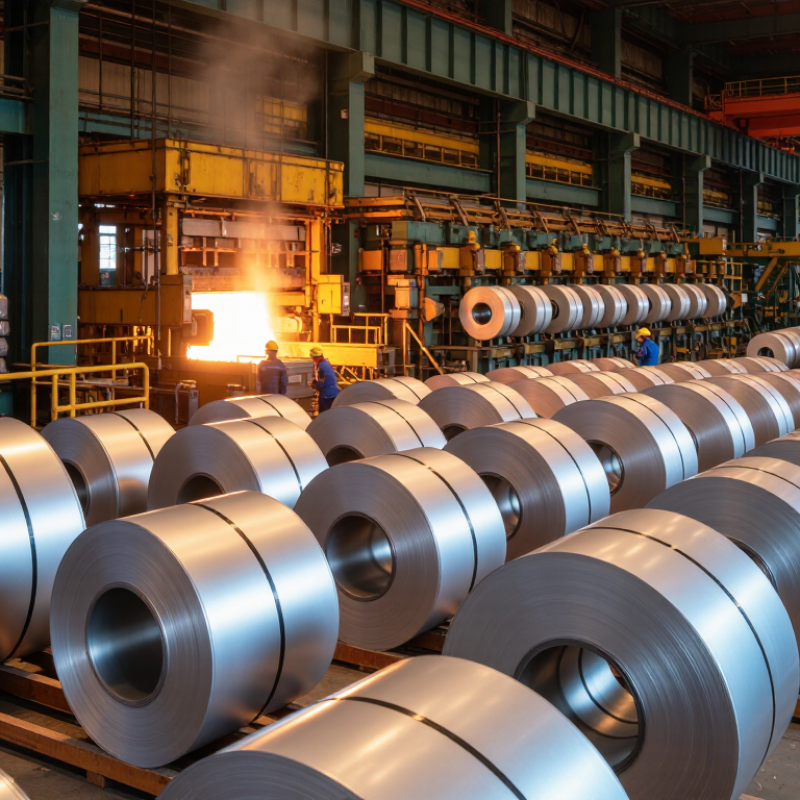
Hot-Dip Galvanized Steel Coil Basics: Z100–Z600 Coating Classes
Top Hot Dip Galvanized Steel Coil Suppliers Worldwide?
Hot-dip galvanized steel coil receives a zinc coating after passing through molten zinc. The coating class describes zinc mass, not steel strength. In common EN 10346 notation, Z100 means about 100 g/m² across both surfaces. Z600 means about 600 g/m². Actual thickness can vary.
A Z100 coil may suit indoor panels, ducting, and lightly exposed parts. Z275 is often selected for roofing, framing, and general construction. Z350 to Z600 provides more zinc for humid, outdoor, or demanding service. However, higher coating mass is not automatically better. Forming can become harder, and surface appearance may change. I have seen buyers request Z600 when good edge design and drainage would have solved the real problem.
Check both faces carefully. A coil can show uneven zinc distribution near edges, weld areas, or recoiled sections. Ask suppliers for coating-mass test results, yield strength, tensile strength, elongation, coil weight, width tolerance, and inspection records. Confirm whether the stated Z value applies to both sides or each side. This detail causes expensive misunderstandings.
Reliable suppliers should explain the production standard, not only quote a low price. Request samples cut from the coil. Inspect them under normal lighting. Look for bare spots, heavy runs, scratches, and oil residue. Salt-spray results may help, but they cannot replace a suitable coating specification. A better question is simple: where will the coil actually work?
Global Supplier Landscape Across Asia, Europe, North America, and MENA
The global hot dip galvanized steel coil market spans Asia, Europe, North America, and MENA. Each region offers different strengths, lead times, and quality expectations. Asian suppliers often provide broad production capacity and competitive export pricing. European mills typically emphasize traceability, consistent coating control, and documented environmental performance. North American suppliers may support regional construction, automotive, and infrastructure demand with shorter inland delivery. MENA suppliers and stockists can offer practical access to nearby projects, especially where port logistics matter.
Choosing a supplier requires more than comparing prices. Check the zinc coating mass, steel grade, coil width, thickness tolerance, and surface finish. Ask for recent mill test certificates and independent inspection options. Experienced buyers also examine packaging quality, edge protection, moisture control, and loading photographs. A low quotation can hide higher costs through delays, claims, or unsuitable tolerances. I have seen specifications look complete, yet omit coil inner diameter or maximum coil weight. That small gap can disrupt production.
Tips: Request samples before large orders. Compare at least three regional offers. Confirm Incoterms, payment stages, and delivery windows in writing. Review corrosion requirements for the destination climate, particularly in coastal MENA areas. Do not assume one region is always cheaper. Exchange rates, freight, customs handling, and local inventory can change the final cost. Supplier performance should be checked over time, not judged from one successful shipment.
Top Suppliers Compared by Capacity, Gauge Range, and 275 g/m² Coating
Top hot dip galvanized steel coil suppliers should be compared by usable capacity, not advertised group output. The World Steel Association reported global crude steel production of about 1.89 billion tonnes in 2023. However, this figure does not show galvanizing-line availability. A serious supplier should disclose annual coating capacity, line speed, plant location, and typical delivery volume. Capacity matters during construction surges, but published figures can be difficult to verify.
Gauge range is equally important. Many established lines produce coils from approximately 0.30 to 3.00 mm, with widths commonly reaching 1,850 mm. Thinner gauges support roofing and appliance panels, while heavier material suits structural parts and industrial enclosures. Buyers should request actual mill certificates, not only catalog ranges. The OECD’s 2024 steel market analysis also highlights persistent global overcapacity, so large capacity alone cannot prove stable quality or dependable scheduling.
The 275 g/m² coating class deserves precise checking. It normally represents zinc on both surfaces, or about 137.5 g/m² per side. Using zinc’s density, that equals roughly 19 micrometres per side before process variation. Small differences become visible at cut edges, bends, and weld zones. Suppliers should report coating test results, surface finish, yield strength, and chemical composition under the relevant standard. Industry data is useful, but not flawless. Some comparisons still mix line capacity with total steel capacity, which can mislead procurement teams.
Top Hot Dip Galvanized Steel Coil Suppliers Worldwide
Anonymous supplier profiles compared by estimated annual HDG capacity, gauge range, and a 275 g/m² coating benchmark.
Large integrated mills generally provide the highest annual capacity and the widest gauge coverage. The 275 g/m² coating level represents Z275, a commonly specified total coating mass of 275 grams per square metre across both sides of the sheet. Capacity figures are rounded representative industry benchmarks, while gauge ranges reflect commonly offered commercial production capabilities.
Quality Standards: ASTM A653, EN 10346, ISO 1461, and Coating Tests
Choosing top hot dip galvanized steel coil suppliers requires more than comparing price or delivery time. World Steel Association data records approximately 1.89 billion tonnes of crude steel production in 2023. This scale makes traceability and consistent coating control essential.
ASTM A653 classifies galvanized sheet by coating designation, such as G60 and G90. These designations describe coating mass, not simply visual brightness. EN 10346 uses designations such as Z100 to Z600 and defines requirements for continuously galvanized flat products. Buyers should request heat numbers, coating results, dimensional records, and inspection dates. Small details matter.
ISO 1461 mainly covers batch galvanizing on fabricated iron and steel products. It should not replace EN 10346 or ASTM A653 for galvanized coil specifications. Coating mass can be checked through gravimetric testing under ASTM A90/A90M, while magnetic gauges provide rapid field readings. The International Zinc Association reports that zinc coatings provide sacrificial corrosion protection, but service life still depends on humidity, salt exposure, cutting, and drainage.
A certificate alone is not proof. Practical inspection should compare three readings across both coil surfaces, because edge areas may behave differently. That method is useful, but not perfect. Gauge calibration, surface roughness, and sampling location can distort results. Experienced suppliers explain these limits instead of hiding them. Supplier evaluation should also examine EN 10346 surface quality, ASTM mechanical properties, ISO 1461 applicability, and independent test records.
Supplier Selection Based on Price, MOQ, Lead Time, and 0.20–3.00 mm Gauge
Selecting hot dip galvanized steel coil suppliers requires more than comparing quoted prices. The World Steel Association reported approximately 1.89 billion tonnes of crude steel production in 2023, showing the market’s scale and supply diversity. However, large production does not guarantee consistent coating quality. Request prices by metric tonne, including zinc coating mass, packing, inland freight, and inspection fees. For 0.20–3.00 mm gauges, confirm width tolerance, yield strength, surface finish, and coil weight before comparing offers. A cheaper coil may create higher stamping waste.
MOQ can change the real purchasing cost. Some suppliers accept trial orders near 20–50 tonnes, while others prefer full-container or mill-scale volumes. Ask whether the MOQ applies per gauge, width, or total order. Lead time also needs detail. Production may require 15–35 days, followed by several weeks for sea transport. The World Bank Commodity Markets Outlook shows that industrial metal prices can fluctuate sharply, so a fixed quotation should state its validity period. I would not trust an attractive price without a production schedule and recent test reports. That is an easy mistake.
Tips: Request EN 10204 3.1 certificates, coating test results, and sample photographs. Confirm whether 0.20 mm material is truly galvanized substrate, not merely a nominal thickness. Add a pre-shipment inspection clause. Small oversights become expensive claims.