Choosing the right Galvalume Corrugated Sheet supplier affects more than the appearance of a roof. It influences service life, installation speed, maintenance costs, and project confidence. A reliable supplier should provide consistent coating quality, accurate thickness, clean forming, and dependable delivery. Small differences matter. A poorly packed bundle can arrive with scratched edges, while uneven corrugation may complicate installation.
This guide examines seven leading supplier options through practical purchasing criteria. These include product specifications, coating standards, available profiles, customization, production capacity, and customer support. It also considers whether suppliers provide clear test reports, sample pieces, warranty terms, and traceable material information. Experienced buyers should compare more than price. A cheaper quotation may exclude protective film, transport packaging, or essential quality documentation.
The suppliers discussed here may suit different needs, from residential repairs to large commercial roofing projects. However, “best” depends on location, climate, order volume, and required standards. That point deserves attention. A supplier with excellent export experience may not offer the fastest local service. Another may provide strong technical support but limited color choices. Buyers should verify current certifications and delivery commitments directly before ordering. Site conditions also deserve review, especially in coastal or high-humidity areas. Galvalume Corrugated Sheet can perform well, but correct thickness, suitable fasteners, proper overlap, and careful handling remain essential. No supplier can compensate for poor installation. This overview aims to support a more informed comparison, while acknowledging that supplier performance can change over time.
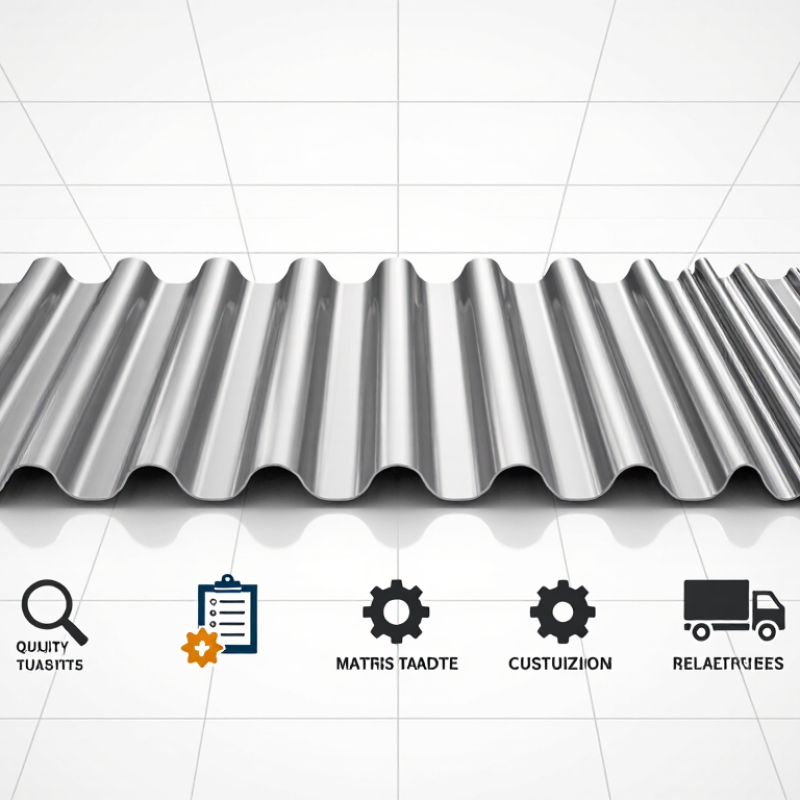
Galvalume corrugated sheet is steel coated with an aluminum-zinc alloy. The coating commonly contains about 55% aluminum, 43% zinc, and a small amount of silicon. This layered surface helps resist rust and reflects sunlight, while the corrugated profile adds stiffness with less material.
It is widely used for roofs, wall cladding, agricultural buildings, and light industrial structures. The raised ribs help water drain quickly and reduce sheet deflection. However, Galvalume is not rust-proof. Cut edges, scratches, trapped moisture, and unsuitable fasteners can shorten its service life. Coastal air and industrial pollution also require careful material selection. A common mistake is judging quality by appearance alone. Coating thickness, steel strength, rib depth, and surface uniformity matter more.
Tips: Ask suppliers for coating mass, base-metal thickness, test reports, and production tolerances. Request a sample and inspect its ribs, edges, and protective finish. Check whether the fasteners match the coating, especially in damp environments. Avoid direct contact with wet concrete or dissimilar metals. I would also confirm delivery packaging, because crushed corners may appear after transport. Supplier claims can sound precise, yet actual measurements sometimes vary. A practical inspection can reveal what a brochure misses.

7 Best Galvalume Corrugated Sheet Suppliers?
A reliable supplier deserves more than a polished catalog. Check compliance with ASTM A792/A792M, coating mass, yield strength, tensile strength, and dimensional tolerances. Request mill certificates for each coil, not a general company brochure. The certificate should match the heat number, production date, thickness, width, and coating designation.
Production scale also matters. The World Steel Association reported approximately 1.89 billion tonnes of crude steel production in 2023. This figure shows a highly competitive market, but it does not prove consistent Galvalume quality. The USGS Mineral Commodity Summaries 2024 estimated global zinc mine production at about 12 million metric tonnes in 2023. Zinc supply can affect pricing and lead times. Ask suppliers how they manage raw-material changes.
Inspect physical samples under clear light. Look for even coating, clean corrugation, sharp profiles, and secure edge protection. Independent testing can confirm coating mass and mechanical performance. Salt-spray results help, but they should not replace field exposure data or proper installation guidance. I once treated a low quotation as strong evidence. That was a mistake. Freight, packaging, rejected coils, and delayed replacements can erase the savings. Compare delivered cost, minimum order quantity, production capacity, and documented claim procedures. A useful supplier answers precise questions without hesitation. Sometimes, the best choice is not the cheapest one.
Anonymous supplier-screening profiles based on recognized Galvalume, coated-steel, and corrugated-sheet purchasing criteria. Use the evidence column to verify each supplier before placing an order.
| Supplier Profile | Best Fit | Relevant Product Standard | Typical Galvalume Coating Options | Common Thickness Range | Corrugation and Customization | Quality Documents to Request | Commercial Strength | Key Risk to Check |
|---|---|---|---|---|---|---|---|---|
| Profile 1 Mill-direct exporter | Large roofing projects and repeat container orders | ASTM A792/A792M or EN 10346, depending on the destination market | AZ50 and AZ55 are common ASTM designations; AZ50 corresponds to approximately 152 g/m² total coating mass on both sides | Approximately 0.30–1.20 mm, subject to the mill’s production range | Standard corrugated profiles with options for cut-to-length sheets, color coating, and pre-painted finishes | Mill test certificate, coating-mass test, dimensional inspection report, and product standard declaration | Usually competitive for high-volume purchases and scheduled production | Confirm minimum order quantity, actual production allocation, and export packaging specifications |
| Profile 2 Regional stock supplier | Fast delivery for smaller or urgent construction orders | ASTM A792/A792M, EN 10346, or the applicable local coated-steel specification | Commonly stocked commercial grades such as AZ50; availability depends on warehouse inventory | Often concentrated around 0.40–0.80 mm for roofing applications | Limited profile selection but faster access to standard lengths and widths | Original mill certificate, warehouse inspection record, and confirmation of storage condition | Shorter dispatch time and lower order quantity requirements | Check whether the stock has been exposed to moisture, condensation, or prolonged outdoor storage |
| Profile 3 Roll-forming specialist | Projects requiring consistent profile geometry and custom sheet lengths | Base coil commonly specified to ASTM A792/A792M or EN 10346 | AZ50 or higher coating classes, with the coating designation confirmed on the base-coil certificate | Approximately 0.35–0.90 mm for many roll-formed roofing profiles | Strong capability for custom pitch, crest height, sheet length, flashing, and accessory fabrication | Incoming-coil certificate, profile drawing, dimensional tolerance report, and first-article sample | Good control over customized dimensions and production repeatability | Verify that forming does not cause excessive coating damage, edge cracking, or profile distortion |
| Profile 4 Architectural roofing supplier | Visible roofs where appearance, color consistency, and finish quality matter | ASTM A792/A792M or EN 10346 for the metallic-coated substrate, plus the paint-system specification where applicable | Galvalume substrate with factory-applied paint systems; coating mass and paint thickness must be separately documented | Approximately 0.40–0.75 mm for many architectural applications | Multiple finishes, concealed-fix or exposed-fix systems, trims, and coordinated accessories | Substrate certificate, paint-system data sheet, color tolerance information, gloss data, and weathering-test evidence | Better support for design coordination and complete roofing-system supply | Confirm color-match tolerance, batch consistency, and warranty exclusions related to cutting or installation |
| Profile 5 OEM contract manufacturer | Private-label programs and recurring custom product specifications | Customer-defined specification supported by ASTM A792/A792M, EN 10346, AS 1397, or JIS G 3321 where relevant | Coating selection can be matched to the project specification; the exact AZ designation must appear on the purchase documents | Typically made to an approved drawing, often within approximately 0.30–1.00 mm | Custom profile tooling, packaging labels, bundled quantities, hole patterns, and cut lengths | Approved production drawing, inspection and test plan, batch traceability, and retained sample procedure | Strong fit for standardized repeat orders and controlled product development | Review tooling ownership, change-control procedures, sample approval, and intellectual-property terms |
| Profile 6 Project fabricator | Complete supply for construction packages involving sheets, flashings, trims, and accessories | Project specification should identify the applicable coated-steel standard and structural requirements | Typically offers standard AZ50 or project-specified higher coating classes | Approximately 0.40–1.00 mm, selected according to span, support spacing, and engineering requirements | Fabricated flashings, ridge caps, gutters, closures, fastener coordination, and installation-ready bundles | Material certificates, fabrication inspection records, packing list, traceability report, and shop drawings | Reduces coordination between multiple subcontractors and accessory suppliers | Ensure the sheet thickness and profile meet the engineer’s structural design rather than relying only on nominal labels |
| Profile 7 Low-volume online exporter | Samples, prototypes, repairs, and small trial orders | Must be confirmed in writing; acceptable references may include ASTM A792/A792M or EN 10346 | Frequently lists AZ50 or AZ55, but the actual coating mass should be verified independently | Commonly offered around 0.30–0.80 mm, with availability varying by profile and length | Usually limited to standard profiles, standard colors, and short production runs | Independent inspection option, actual mill certificate, dimensional photos, and pre-shipment inspection report | Flexible quantities and relatively simple sampling process | Check product identity, net thickness, coating mass, payment protection, freight terms, and after-sales response |
The seven leading supplier types serve different project needs. Integrated coil mills usually provide stable zinc-aluminum coating and consistent substrate quality. Regional roll formers offer faster delivery and practical profile adjustments. Export stockists often hold standard sheets in several lengths and thicknesses. Project fabricators can match roofing layouts, flashing details, and local load requirements.
Specialist roofing suppliers understand installation problems, including oil-canning, exposed fasteners, and poor lap alignment. Custom coating houses suit buyers seeking specific colors, gloss levels, or protective finishes. Metal service centers may provide cutting, bundling, and mixed-load support for smaller orders. Fit matters. A lower price can hide weak packaging or uncertain coating data.
Experienced buyers should request coating mass, base-metal thickness, yield strength, profile dimensions, and test reports. Ask twice. Check whether measurements describe nominal or actual thickness. A useful supplier should explain salt-spray testing, edge protection, storage advice, and warranty limits without vague promises. Inspect sample sheets for clean ribs, even coating, sharp ends, and damage from strapping.
My own checklist is not perfect. Delivery history can matter more than polished brochures. Ask for recent project references and photos showing bundled sheets before shipment. Review the packing method, especially for humid routes. A reliable supplier also admits limits, such as unavailable custom lengths or seasonal production delays. That honesty often signals stronger technical control.
Choosing among seven galvalume corrugated sheet suppliers requires more than comparing price lists. Product quality begins with the steel substrate, coating weight, sheet thickness, and forming accuracy. Ask for mill certificates, coating specifications, and sample pieces. A clean surface, consistent ribs, and even edges usually indicate better production control. However, appearance alone can mislead.
Prices should be compared by usable area, not only by price per sheet. Include freight, packaging, cutting fees, minimum order quantities, and possible replacement costs. A cheaper sheet may have thinner steel or less protective coating.
That difference can become visible when screws pull through or edges corrode. Request quotations for identical specifications. Small details matter. Delivery reliability also affects the real budget.
Tips: Check whether the supplier provides independent test reports, clear warranty terms, and installation guidance. Reliable service includes quick answers, accurate drawings, protective packaging, and realistic delivery dates. Ask how rejected sheets are handled. Some suppliers promise flexibility but respond slowly after payment, which is a warning sign. It is also wise to order a small sample before a large purchase. I would not treat any ranking as permanent; production batches, raw material costs, and service quality can change. A supplier that performed well last year may need fresh verification today.
Choosing a galvalume corrugated sheet supplier requires more than comparing prices. ASTM A792/A792M covers aluminum-zinc alloy-coated steel used for building applications. Ask whether the supplier provides test certificates, coating mass, steel grade, and thickness tolerances. A dependable supplier should explain these details without hiding behind technical language.
The coating composition matters. Industry technical data commonly identifies 55% aluminum, 43.4% zinc, and 1.6% silicon by weight. This coating can improve corrosion resistance, but performance still depends on cutting, fastening, drainage, and local exposure. The World Steel Association reported global crude steel production of about 1.89 billion tonnes in 2023. That scale makes traceability important. Ask for heat numbers, production dates, and inspection records.
Check the supplier’s forming equipment and packaging methods. Sheets should arrive with straight profiles, clean edges, and dry, separated bundles. Confirm the effective cover width, not only the overall width. Request samples before placing a large order. Compare the actual rib height, coating appearance, and bending behavior. A cheaper quotation may exclude freight, protective film, accessories, or replacement terms. That mistake is common. I would also question unusually perfect delivery promises, especially during peak construction periods. No checklist catches every failure. Review references from projects with similar rainfall, wind exposure, and roof design. Reliability is shown in records, not confident wording.

5960 Odana Road
Madison, WI 53719
T: 608.442.0032
1001 Frank H Street
Waunakee, WI 53597
T: 608-268-7140