How to Choose Fiberglass Entry Doors in 2026?
Choosing fiberglass entry doors in 2026 requires more than comparing colors, prices, and showroom displays. A reliable decision should connect energy performance, weather resistance, security, maintenance, and installation quality. The U.S. Department of Energy reports that air leakage and inadequate insulation can significantly increase residential heating and cooling demands. Doors are only one part of that problem, but a poorly fitted entry door can create a noticeable draft near the threshold.
Performance labels provide useful evidence. The National Fenestration Rating Council evaluates products through ratings such as U-factor, solar heat gain coefficient, and air leakage. These figures help homeowners compare fiberglass entry doors under consistent conditions. ENERGY STAR guidance also emphasizes climate-specific efficiency rather than a single national standard. A door suited to a cold northern climate may not be ideal for a hot, humid region.
Details matter. A dense fiberglass skin, insulated core, adjustable threshold, and compression weatherstripping can improve comfort beside the front hallway. However, the door slab cannot compensate for a warped frame or careless installation. That point is often missed. The Federal Alliance for Safe Homes and building-science professionals repeatedly stress proper water management around openings, including flashing and sealed joints.
The 2026 buying process should therefore examine the complete door system, not just the decorative panel. Manufacturer test data, warranty language, hardware quality, and installer experience deserve equal attention. Some marketing claims still sound stronger than the available evidence. Buyers should question them. This guide will explain how to compare materials, ratings, security features, design options, and lifecycle costs with practical judgment.
Define Your Entry Door Needs and Installation Conditions
Choosing a fiberglass entry door starts with the opening, not the showroom sample. The U.S. Energy Information Administration’s 2020 Residential Energy Consumption Survey reported that space heating used 42% of household energy. Therefore, drafts deserve serious attention. Define the main need: insulation, security, daylight, accessibility, or weather resistance. Measure the rough opening, jamb depth, threshold height, swing clearance, and wall thickness. Small errors matter.
Inspect the installation site carefully. Is the porch exposed to driving rain, coastal air, snow, or strong afternoon sun? Check whether the sill is level, the frame is plumb, and the surrounding wall can support the door assembly. A beautiful slab cannot correct a soft or poorly drained sill. I would rather delay ordering than force a standard size into an irregular opening.
Use performance data, not appearance alone. National Fenestration Rating Council certification reports U-factor, solar heat gain coefficient, visible transmittance, and air leakage values. Compare those figures with your climate and entry orientation. FEMA’s Building Codes Save study estimated that modern hazard-resistant codes can return about $11 for every $1 invested. Local wind, flood, and fire requirements still control the installation. Confirm them before selecting glass, hardware, and anchoring methods. I have seen homeowners overlook the threshold. That mistake is expensive. Door selection is rarely perfect without revisiting the site conditions.
Evaluate Energy Efficiency, Security, Durability, and Weather Resistance
How to Choose Fiberglass Entry Doors in 2026?
A fiberglass entry door should be judged by its complete assembly, not its surface alone. The U.S. Department of Energy reports that windows can account for 25–30% of residential heating and cooling energy use. Doors contribute less, but poor sealing still creates noticeable drafts near the threshold. Check the NFRC label for U-factor and air-leakage ratings. Lower U-factor values generally indicate better insulation. ENERGY STAR requirements also vary by climate zone, so one specification cannot suit every home.
Security depends on the frame, hinges, strike plate, and lock installation. A reinforced fiberglass slab is only one part of the system. Look for tested performance under recognized residential door standards, such as those published by FGIA. Longer screws, reinforced strike areas, and properly aligned hinges matter during everyday use. Small details matter.
Weather resistance requires evidence. FGIA testing evaluates air infiltration, water penetration, and structural performance under controlled pressure. Ask for test ratings instead of accepting vague terms like “weatherproof.” Fiberglass resists moisture better than many wood products, yet its edges and hardware still need protection. I have seen well-insulated doors perform poorly because installers compressed the weatherstrip unevenly. That is easy to overlook. Recheck the threshold after seasonal movement, especially in regions with driving rain, freezing temperatures, or intense sunlight. Performance claims are useful, but installation quality remains the uncomfortable variable.
How to Choose Fiberglass Entry Doors in 2026?
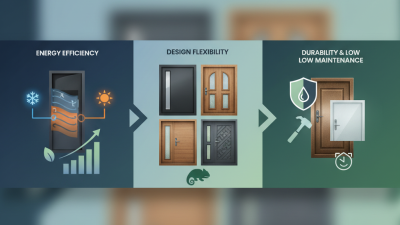
Compare the practical performance of fiberglass entry doors across four key selection criteria.
Ratings use a 1–5 benchmark based on typical fiberglass construction characteristics; actual results depend on the complete door system, installation, glazing, hardware, and certified test data.
Fiberglass doors generally provide strong resistance to moisture, warping, corrosion, and everyday impact.
For energy performance, check the NFRC U-factor and, where available, the door’s air-leakage rating.
For security, look for a reinforced frame, multi-point locking, tamper-resistant hinges, and tested hardware.
Weather resistance should be verified through complete-system testing and correct installation.
Verify Compliance, Installation Quality, Warranty, and Long-Term Value
How to Choose Fiberglass Entry Doors in 2026?
Verify compliance before comparing colors or decorative glass. Look for an NFRC label showing U-factor, solar heat gain coefficient, and air leakage ratings. The National Fenestration Rating Council explains that tested ratings allow fair product comparisons. ENERGY STAR guidance also stresses proper sizing, weatherstripping, and low-emissivity glazing for efficient residential doors. A low U-factor alone can mislead. Frame design still matters.
Installation quality often decides whether the door performs as promised. Ask for a written opening measurement, sill-pan details, compatible flashing, and a documented fastener schedule. The U.S. Department of Energy’s Building America research identifies air sealing and water management as critical parts of durable envelope work. Check the threshold after installation. It should feel solid, close evenly, and show no daylight around the gasket.
Read the warranty before signing. Confirm coverage for the slab, finish, glass, hardware, labor, and coastal exposure. Some exclusions are easy to miss. The 2024 Cost vs. Value Report estimated a 119% cost recoupment for fiberglass entry-door replacement, but local labor and maintenance can change that result. Good value means fewer drafts, stable operation, and repairable parts over many years. I would still photograph the installation and keep every document. Small evidence helps when memory fails.