What Is the Best Material for Exterior Sliding Doors?
Choosing the best material for exterior sliding doors is not simply a matter of appearance. The right choice must withstand rain, sunlight, wind, temperature changes, and daily use. A beautiful door can still fail if its frame swells, corrodes, or loses its seal.
Joe Lstiburek, a respected building-science expert, warns, “Water is the most destructive force in buildings.” His point matters here. Exterior sliding doors face water at vulnerable joints, tracks, corners, and thresholds. Aluminum offers slim frames and strong weather resistance. Vinyl usually provides good insulation at a lower cost. Fiberglass can resist warping, although quality varies. Wood brings warmth and character, but it needs regular protection, especially in wet climates.
The climate changes the answer.
A coastal home may need corrosion-resistant aluminum hardware. A cold region may benefit from insulated frames and low-emissivity glass. In a hot, sunny location, durable finishes and solar-control glazing deserve close attention. Installation also matters. Even the finest exterior sliding doors can leak when the sill lacks proper drainage or flashing.
There is no universal winner.
This is where many comparisons become too confident. Material labels alone cannot reveal manufacturing quality, installation skill, or long-term maintenance needs. A practical evaluation should examine thermal performance, drainage design, hardware strength, warranty terms, and local exposure. This guide compares those factors clearly, while acknowledging an uncomfortable truth: the cheapest option may become expensive after repeated repairs.
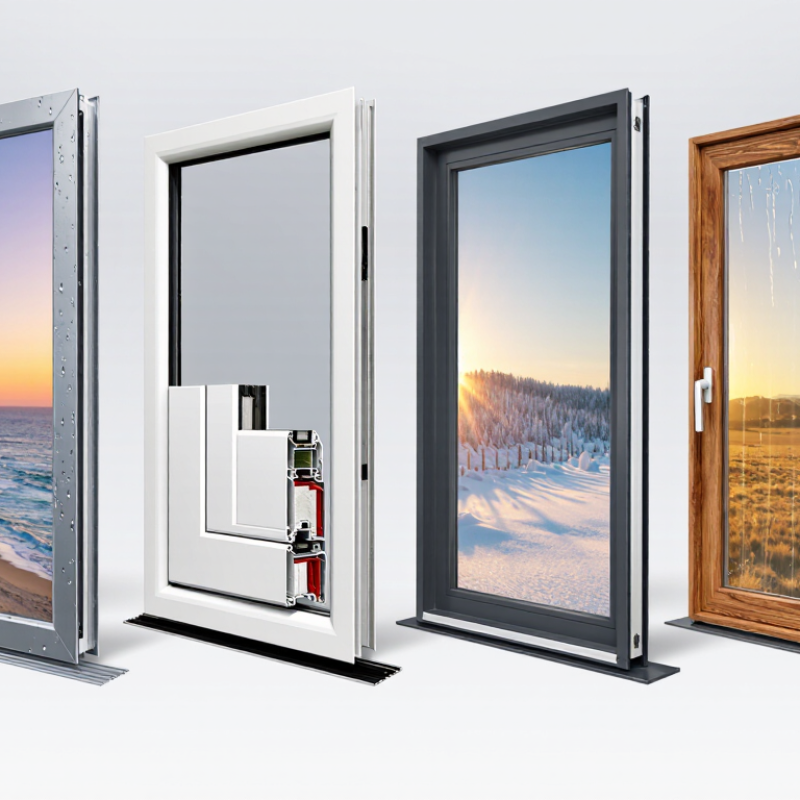
Key Factors for Choosing Exterior Sliding Door Materials
Exterior sliding doors face rain, sunlight, wind, and daily movement. Material selection should begin with climate, not appearance. In coastal areas, corrosion resistance matters greatly. Aluminum offers slim frames and strong structural support, but it can transfer heat unless it includes a reliable thermal break. Vinyl usually provides better insulation at a lower cost, though intense sunlight may cause expansion or fading over time. Fiberglass is stable and resists moisture, but its higher price may challenge smaller renovation budgets.
Glass performance deserves equal attention. The U.S. Department of Energy reports that windows can cause 25–30% of residential heating and cooling energy use. Sliding doors contain large glass areas, so low-emissivity coatings, insulated glazing, and correct solar heat gain control are practical priorities. The National Fenestration Rating Council evaluates U-factor, solar heat gain coefficient, visible transmittance, and air leakage. These ratings reveal more than frame material alone.
Installation changes the result. A well-rated door can still leak air through poor flashing, uneven tracks, or weak perimeter seals. I have seen attractive doors perform badly after rushed installation. That is easy to overlook. Wood provides warmth and repairability, but it demands regular sealing, especially near wet climates. Aluminum, vinyl, and fiberglass reduce maintenance, yet none is perfect. Check drainage paths, hardware quality, threshold height, and local wind requirements before choosing. The best material depends on exposure, energy goals, maintenance tolerance, and installation accuracy.
Aluminum Sliding Doors: Strength, Style, and Low Maintenance
When homeowners compare exterior sliding doors, aluminum often stands out for strength, style, and low maintenance. In my experience, its rigid frame supports large glass panels without feeling bulky. That creates wider views and brighter rooms. Slim sightlines also suit modern homes and older renovations. Powder-coated finishes resist peeling and usually need only mild soap and water. However, material quality varies. Thin, poorly finished frames may dent or discolor sooner than expected.
A well-designed aluminum door should include thermal breaks between its inner and outer frame. These reduce heat transfer and help limit interior condensation. Without them, the frame can feel cold during winter. Check the door’s drainage paths, weather seals, and locking points carefully. I also inspect the rollers during installation. Smooth rollers make daily movement quiet and reduce strain on the frame. Small details matter here. A level track prevents the panel from dragging and protects the seals.
Aluminum is not maintenance-free. Coastal air, dust, and hard water can still mark the finish. I recommend rinsing exposed frames several times each year, especially near the ocean. Avoid abrasive cleaners, which can dull the coating. There is another honest concern: aluminum may provide less natural insulation than well-built wood or composite frames. A poorly adjusted door can also leak air, regardless of its material. That is easy to overlook. Before choosing, review local weather conditions, glass performance, and the installer’s adjustment process.
Vinyl Sliding Doors: Energy Efficiency and Affordability
Vinyl sliding doors are often chosen for exterior openings because they balance energy efficiency with a manageable purchase price. Their frames resist moisture, rot, and peeling paint, which can reduce maintenance over many years. The material also limits heat transfer better than some basic metal frames. That matters beside a sunny patio.
The glass usually makes the bigger difference. Double-pane units with low-emissivity coatings can slow heat loss during winter and reduce solar gain in summer. Warm-edge spacers and tight weatherstripping help prevent cold drafts around the moving panel. During installation, I have found that small alignment errors can undermine these features. A door may have excellent specifications, yet still feel drafty if the frame is not square.
Vinyl is not perfect. Darker frames may expand noticeably under strong sunlight, and cheaper rollers can become noisy or stiff. A wide opening also needs careful support, especially in older homes. Ask for the door’s U-factor, air-leakage rating, glass details, and warranty terms before comparing prices. A lower upfront cost can lose its appeal when rollers, seals, or screens need early replacement. Still, basic cleaning and occasional track care are usually simple. That simplicity has real value.
Wood and Fiberglass Sliding Doors: Comparing Beauty and Performance
Wood and fiberglass sliding doors offer different answers to the same design challenge: beauty, comfort, and long-term performance. Wood creates natural warmth that fiberglass cannot fully copy. Its grain catches afternoon light, and custom stains can match floors, beams, or garden furniture. Wood also provides reliable insulation when properly sealed. However, it can absorb moisture, swell, or develop peeling finishes. Coastal air and strong sunlight make maintenance more demanding.
Fiberglass is usually more stable in changing weather. It resists warping, rot, and moisture, which helps sliding panels move smoothly over time. Modern fiberglass can imitate painted wood, although close inspection may reveal a less authentic texture. Its appearance is attractive, but not always emotionally convincing. That difference matters in a home where the door becomes a major visual feature. Frame quality, glass selection, drainage, and professional installation also affect performance. A beautiful door can still disappoint if the track collects water or the panels are poorly aligned.
Tips: Choose wood for character and a hands-on maintenance routine. Choose fiberglass for steadier performance and fewer refinishing tasks. Inspect samples outdoors, not only under showroom lighting. Test the lock, handle, and sliding action before ordering. One detail is easy to overlook: dark finishes can become very hot in direct sun. Neither material is perfect, and the better choice depends on climate, exposure, cleaning habits, and how much visual authenticity you value.
How to Select the Best Material for Your Climate and Home
What Is the Best Material for Exterior Sliding Doors?
How to Select the Best Material for Your Climate and Home
The best material depends on weather, wall design, maintenance habits, and daily use. No option performs perfectly everywhere. In my experience, fiberglass offers a dependable balance for many homes. It resists moisture, does not easily warp, and handles temperature changes better than ordinary wood. This makes it useful in rainy regions and homes with large seasonal shifts.
Aluminum works well in coastal or modern homes because it is strong, slim, and resistant to rot. However, metal can transfer heat and cold unless the frame includes an effective thermal break. In hot climates, dark frames may become noticeably warm in direct afternoon sun. Energy-efficient glass and exterior shading matter just as much. Small details count.
Wood provides natural warmth and can suit traditional architecture beautifully. It needs regular sealing, especially near heavy rain or salt air. Vinyl can reduce cost and maintenance, but quality varies, and some frames may expand in intense heat. I once chose a low-maintenance material for a damp renovation, then underestimated drainage around the threshold. The door survived, but the surrounding trim did not. Check the sill, flashing, weather seals, and installation quality before judging the material alone. A local building professional can also confirm suitable ratings for wind, water, and insulation.
What Is the Best Material for Exterior Sliding Doors?
Typical thermal conductivity of common sliding-door frame materials
Lower thermal conductivity generally means better resistance to heat transfer. Wood and uPVC typically provide stronger natural insulation for cold climates, while fiberglass offers a durable balance of insulation and weather resistance. Aluminum and steel are strong and low-maintenance, but they require effective thermal breaks and insulated panels to perform well in hot or cold conditions. Actual door performance also depends on glazing, seals, frame design, installation quality, and local climate.
Approximate bulk-material values in W/m·K; door-system performance may differ substantially.